

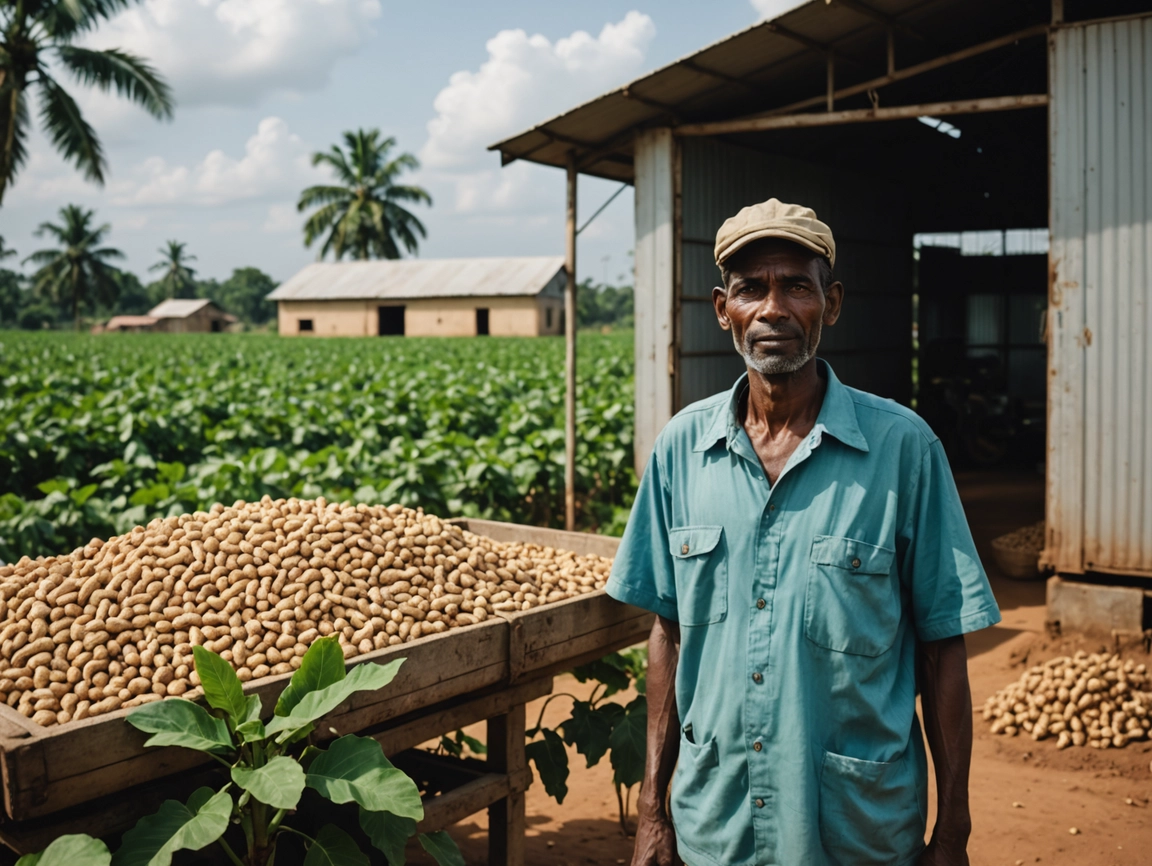
For groundnut farmers in districts like Anantapur and Chittoor, the harvest is only half the battle. The real challenge begins during storage. A silent, invisible enemy known as Aflatoxin can turn a bumper crop into a total loss overnight.
In today’s global market—where European and Asian buyers have “zero tolerance” for contamination—cold storage has moved from being an option to a mandatory requirement.
What is Aflatoxin? The Invisible Profit Killer
Aflatoxins are poisonous carcinogens produced by certain molds (Aspergillus flavus) that grow on soil-based crops. Groundnuts are particularly vulnerable because they grow underground.
If harvested groundnuts are stored in warm, humid conditions (common in AP’s tropical climate), these molds multiply rapidly. You cannot always see or smell Aflatoxin, but laboratory tests will detect it, leading to:
Export Rejections: Cargoes worth lakhs are sent back from international ports.
Health Hazards: Contaminated nuts are unsafe for human and livestock consumption.
Price Crashes: Once a batch is suspected of mold, its market value drops to near zero.
How Cold Storage Stops the Mold
The science is simple: Mold needs heat and moisture to breathe. By moving groundnuts into a temperature-controlled cold storage facility immediately after drying, farmers can effectively “freeze” the mold spores.
- Temperature Control: Keeping the pods at a steady $5$°C to $8$°C ensures that the Aspergillus fungus remains dormant.
- Humidity Management: Professional cold storages maintain a relative humidity of 55–60%. This is the “sweet spot”—dry enough to stop mold, but moist enough to prevent the kernels from becoming shriveled and oily.
- Meeting Global Standards: The Path to Export
With the APEDA (Agricultural and Processed Food Products Export Development Authority) tightening quality norms, cold storage has become a badge of quality. Groundnuts stored in a certified cold chain facility are much more likely to pass the rigorous aflatoxin testing required for the EU, UK, and US markets.
The Bottom Line: For an AP farmer, the cost of cold storage is a small “insurance premium” compared to the massive risk of losing an entire harvest to mold.