

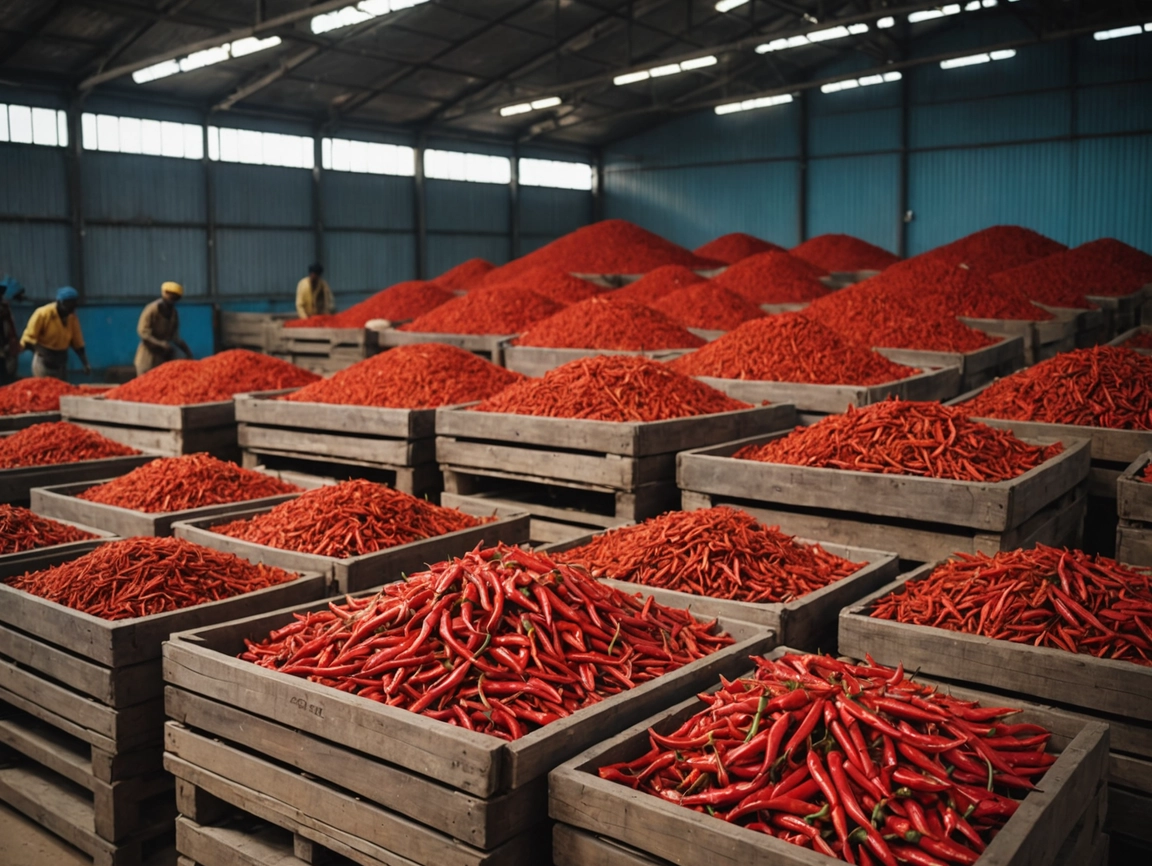
In the bustling spice markets of Andhra Pradesh, particularly in Guntur, it’s a reflection of their market value. However, any seasoned farmer knows that once the chili is harvested, the clock starts ticking. Without the right intervention, that vibrant, premium red can quickly turn into a dark, low-value commodity.
The Science of the Fade: Why Chilies Lose Value
Freshly dried red chilies are rich in Capsanthin (the pigment that gives color) and Capsaicin (the compound that provides heat). When stored at room temperature in the humid climate of Andhra Pradesh, two things happen:
- Oxidation: Exposure to oxygen and heat causes the bright red pigment to degrade, turning the chili deep brown or black.
- Moisture Loss: Improper storage leads to brittle pods that break easily during transport, reducing them to “broken grade” which sells for much less.
How Cold Storage Locks in Quality
Modern cold storage facilities in AP act as a “time machine” for spices. By maintaining a steady environment, they preserve the two most important factors for exporters:
- ASTA Color Retention: By keeping temperatures between 4°C and 9°C, the oxidation process is almost entirely halted. This ensures the chili maintains its ASTA (American Spice Trade Association) color value, which is the primary metric international buyers use to set prices.
- Pungency Preservation: For high-heat varieties like Teja (S17), heat is the enemy of spice. Cold storage ensures the capsaicin remains stable, so the “bite” is just as strong six months later as it was on day one.
Strategic Stacking: The Role of the Gunny Bag
If you walk into a top-tier cold storage facility, you’ll notice a specific pattern: gunny bags stacked neatly on wooden platforms.
- The Wooden Floor Advantage: Wood acts as a natural insulator, preventing “floor sweating” or moisture from seeping into the bottom bags.
- Breathability: Jute (gunny) bags allow for micro-ventilation. Unlike plastic, they let the chilies “breathe,” preventing the internal heat buildup that can lead to fungal growth or aflatoxin contamination.
The Profit Angle: Timing the Market
The most successful traders in Guntur and Prakasam don’t sell their entire harvest in March. By utilizing cold storage, they can wait for the off-season (August to November) when supply is low.
Conclusion
For the Andhra farmer, cold storage is no longer a luxury—it is a critical tool for global competitiveness. Whether you are growing the deep-red 5531 Byadgi for its color or the fiery Teja for its punch, the “Andhra’s Red Chilies Storage” secret lies in the cold.